When you walk into an old Indian temple, you will notice something instantly. The beauty of that place is not decorative but it feels completely engineered. Every pillar, corridor, threshold and courtyard carries a sense of intention. That’s because temple architecture in India was never just about building a place to pray. It was about shaping that space in a way that light, direction, sound, movement and silence could work together. Over time that same thinking quietly travelled from temples into homes by influencing how Indians began to imagine ideal living.
Traditional temples were designed like living maps of order. The plan often followed a sacred geometry where the centre mattered and the surroundings supported it. Even without knowing the technical names, you can feel it everywhere; the symmetry, the measured steps, the balanced proportions. Precision was a form of devotion. A carving was not just a carving but it was a detail that completed the whole. This is why temple structures still feel timeless because their beauty is built on rules not trends.
And Indian architecture is old in the truest sense that is ancient, tested and still standing. Across centuries the artisans treated stone like storytelling. Each wall had a meaning in its own and the columns were not for support but they were the rhythm. The structures were made in a way that frequencies get transferred to the walls while the person is praying with all dedication. Every surface carried effort and that effort was deliberate. The architecture was never rushed. The smallest motif was carved as carefully as the grand entrance because the belief was simple that if the space is sacred, the work must be sincere. That culture of detail shaped how people started viewing construction itself. Building became a slow craft not a quick task. Even today, you will hear families say they want to do it properly and even if it takes much time because in the Indian imagination, the home is not only a structure. It is a place that holds energy, memory and lineage.
One of the strongest temple influences on homes is the obsession with direction. In many Indian households, orientation is not treated as a random choice. People ask where the sun rises, where it sets, which side gets harsh heat, which corner stays calm and how airflow moves. And all these are not just random thoughts. This is where spiritual belief and practical logic overlap. Sun rays are not only auspicious but they also decide comfort. Morning light is softer, cleaner and often preferred for spaces meant for freshness like kitchens, prayer corners or study areas.
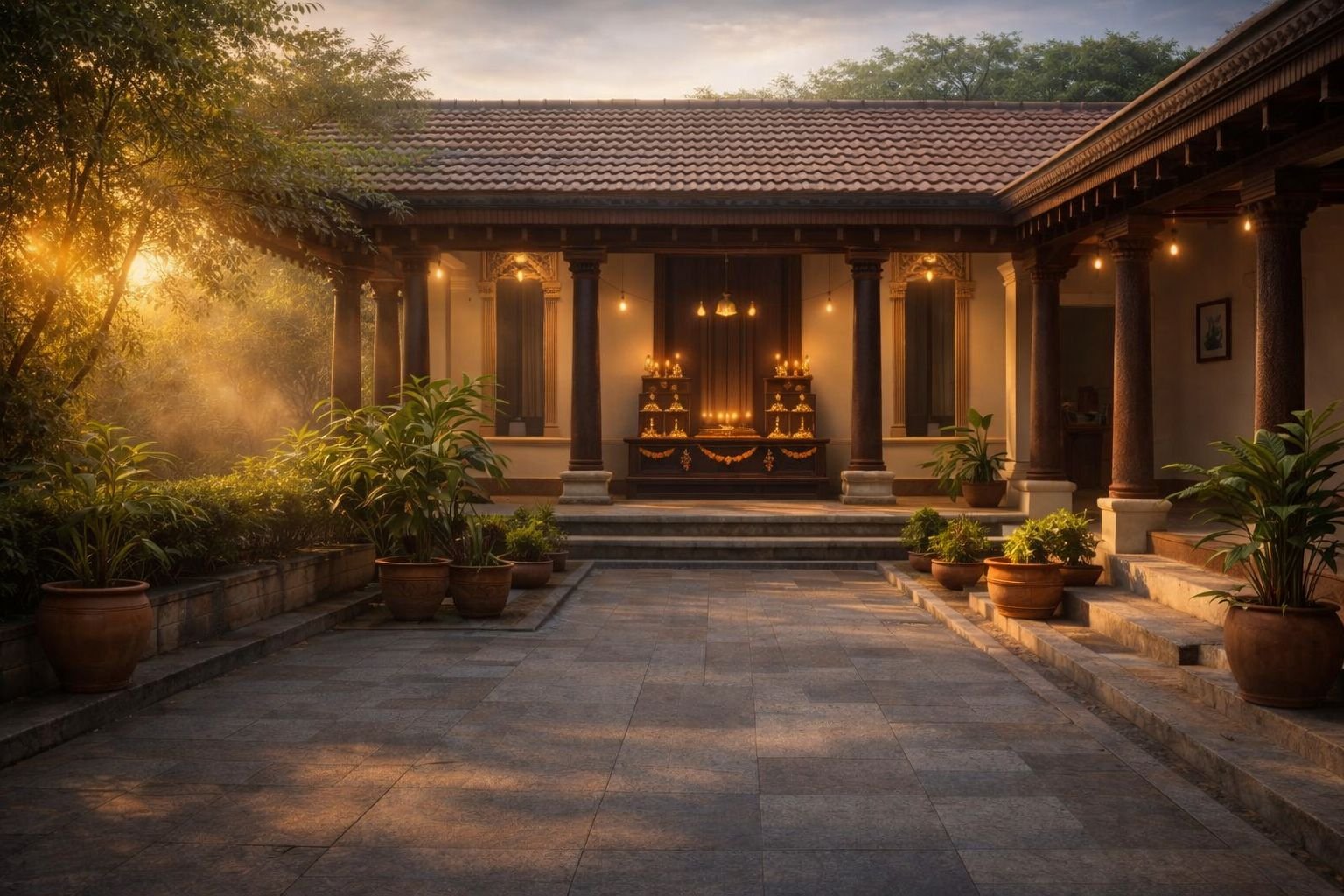
The temple’s relationship with sunlight also shaped how the pooja space found its way into homes. Many families position a home temple where natural light can touch it gently without making it too bright or too exposed. The idea is simple: a sacred corner should feel steady, not chaotic. This affects design choices too like small alcoves, wooden panels, patterns, brass accents and a quiet elevation that separates the sacred from the ordinary without building a wall between them.
Even beyond the prayer room, the spirituality has shaped Indian interiors in subtle ways like courtyards that bring sky into the house, thresholds that mark transitions and the preference for clean axes and balanced layouts. What began in temples as devotion became in homes, a desire for harmony. And maybe that is the real inheritance of architecture that teaches you to live with awareness where even the smallest detail is placed with purpose.